
S. T. Joshi: H.P. Lovecraft, a Gateway to an Intellectual Life
▶ Listen to this episode · 52 min
At thirteen, in the public library in Muncie, Indiana, S. T. Joshi found H. P. Lovecraft and was, in his words, completely blown away. At sixteen he read him a third time with a dictionary beside him, having decided he needed to know exactly what words like eldritch meant if he was going to understand what Lovecraft was saying.
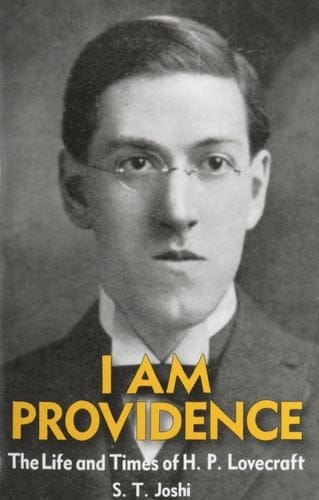
Fifty years of work have followed. Six years at Brown — a BA and an MA in classics rather than English, because Lovecraft's papers were in the library there. A journal founded at twenty-one. Twenty-four volumes of letters, edited with David E. Schultz, completing the whole of Lovecraft's surviving correspondence. A twelve-hundred-page biography. His own press, issuing roughly a title every two weeks.
The thread kept going. Lovecraft led him to Machen, Dunsany and Blackwood, then to Bierce, Mencken and George Sterling, then to the classics, colonial architecture, and a two-volume history of atheism in the West. He calls Lovecraft a gateway to his whole intellectual life, and here he follows it everywhere it has taken him — including, this month, the first full biography of Clark Ashton Smith.
Topics & Timestamps
(00:38) India to Indiana, and an older sister who took him to the library
(02:00) de Camp's 1975 biography, and the papers at Brown
(03:00) A gateway to atheism, the classics, colonial architecture
(03:18) What the books are about: cosmicism, in one word
(04:34) Reading Lovecraft with a dictionary at sixteen
(05:21) Founding Lovecraft Studies at twenty-one with Mark Michaud
(06:52) Scholarly but not academic, and why that mattered
(08:27) Why one author is inexhaustibly interesting
(08:50) Twenty-four volumes of letters, and a correspondence complete
(09:45) From conservative to a socialist who wanted FDR to go further
(10:12) One man's literature, or literature: Machen, Blackwood, Bierce
(11:48) The racism, and returning the World Fantasy Award
(13:50) Reading the fiction: Mountains of Madness, Colour Out of Space
(14:37) Two Lovecraft novels: one supernatural, one a detective story
(16:00) Having written the biography, why write him as a character
(17:47) Whether the scholar gets in the novelist's way
(19:13) Spectral Realms, and a resurgence in weird poetry
(20:30) Why poetry fell out of the culture, and whose fault that is
(21:32) Formal verse, free verse, and the line he draws at obscurity
(24:30) Dreams of Fear, and weird poetry back to Homer
(25:33) More naturally an editor than a writer
(26:00) Chelsea House, and leaving a Princeton PhD behind
(28:11) Sarnath Press, and the books he wanted to get out himself
(29:00) Restoring Hammett; rediscovering W. C. Morrow
(30:55) How Ellery Queen rewrote Hammett, and the proof at Columbia
(34:34) What is left to do in Lovecraft scholarship
(36:16) The Star-Treader: why Smith, and why now
(38:10) George Sterling, and the bohemians of Carmel-by-the-Sea
(39:51) Atheism: raised in no tradition, convinced by the letters
(41:00) The Downfall of God, the work he calls his greatest achievement
(42:54) Competing against nobody but himself
(45:50) Where a new reader should start with Lovecraft
(47:03) Where to start with weird poetry — and the weird Robert Frost
(48:07) The dream: ten volumes of Dunsany, and a castle near Dublin
(50:29) Advice to new writers: read backwards, then start
Transcript
Terry Heath: This is Terry Heath, and I'm here today with ST Joshi. Hello, S T.
S. T. Joshi: Hi there.
Terry Heath: ST is the leading HP Lovecraft scholar. You also write novels and edit a poetry journal. Tell me how you decided this was going to be your life.
S. T. Joshi: Well It's funny. I was born in India in nineteen fifty eight and my family came over here to the US in nineteen sixty three. We settled in the Midwest. and the funny thing is that I adapted as one does at that early age to you know, to American ways very readily. I greatly enjoy playing football and baseball and that sort of thing, so I became a you know, a good American. but the funny thing is that I actually didn't really even like reading even though I did well enough in school, it was pretty easy for me. but at one point, about the age of ten, my older sister said, you know, you gotta start reading books. she dragged me to the public library in Muncie, Indiana, where we were living at the time. My mother was teaching at Ball State University, and just said, Pick something to read, you know, and th and I started reading things like the Chronicles of Narnia, which were was wonderful. And at some point, I guess the age of thirteen or fourteen I stumbled upon Mr. H. P. Lovecraft and the public library and was just completely blown away. I said, My God, this guy is right like nobody else I've ever read. and even at that early age of I I began inj becoming interested in Lovecraft the man himself, you know, and there was not a lot of material out there at this time, of course. He was getting popular, in terms of sales of paperbacks and some movie adaptations, but critical or biographical work was pretty slim at the time. mister De Camp's biography came out in nin nineteen seventy five. That was a great achievement for its time. so I was inspired by that. and I think it was from that biography that I discovered that Lovecraft's papers and manuscripts and letters and all these things largely reside at the library of Brown University in Providence, Rhode Island, which is he lived in Providence for most of his life. so I said, Alright, I guess I gotta go to Providence and go to Brown and basically study HP Lovecraft. and luckily I got in, spent the next six years there. bachelor's and master's degree in classics, not in English, while st doing as much study of Love Reft as I could on the side. and in addition to that Lovecraft himself led me to all sorts of other areas of interest, not just other weird writers like Arthur Mackin Lord Dunsaney before him or Ramsey Campbell and and others after him, but other subjects like atheism on which I've written a great deal, even things like colonial architecture, which I find fascinating because Lovecraft found it interesting. the classics themselves, Latin and Greek, I I studied that because I I needed to know why Lovecraft was so interested in that, but then of course I got interested in them on their own account and I still have a great devotion to to classical literature. So, in a sense Lovecraft became kind of a gateway to my whole intellectual life.
Terry Heath: How could you distill what Lovecraft books are about? What they what are they?
S. T. Joshi: Well, his signature accomplishment, at least at in his judgment, and I think he's right about this. can be summed exactly in one word, namely cosmicism. Which what he meant by that was the depiction in fiction of the vastness of the universe, both in space and in time, and the resulting inconsequence of human life, and all Earth life really, within that framework. and that idea is based upon his philosophical perspective, which was atheism, materialism he was violent vehemently anti religious. He you know, because he said the only way that human beings can have significance in the universe, is if there was a God who who created us for that purpose, but there is no God and therefore we have no significance. and the depiction of that in literature w was tremendous achievement, and it's something that he worked on throughout his whole life and and I think the pinnacle of that was either the the great short novel at the Mountains of Madness, or the the the the novella The Shadow Out of Time. But really th a good many of his works depict this element of cosmicism.
Terry Heath: So you you were I think thirteen when you first discovered his work?
S. T. Joshi: Roughly. I I and I didn't I I can't say that I even understood it, though his his language can be pretty difficult. He had a very wide vocabulary because he felt that precision in language was necessary to convey the exact shades of meaning that he that he wanted. In fact, I think on my third reading of Lovecraft, when I was like sixteen, seventeen, I sat reading him with a dictionary next to me so that I could figure out what words like eldritch and caca demoniacal and other words like that really meant, because I knew that I n had to understand those meanings if I were really to fully understand what Lovefrapp was saying.
Terry Heath: You started Lovecraft studies at twenty one. Who did you imag
S. T. Joshi: Yes, I guess so. At at at I was a s junior at Brown University, I think. the funny thing is this was this was as a result of my involvement with Mark Michaud, who had founded Necronomicon Press as early as nineteen seventy five, and he was he was a year younger than me, so this was he was I think a junior in high school when he began publishing work under that imprint. and then he came to Brown a year after I did. and we worked on a lot of different projects, but by nineteen seventy seventy nine we said, we need a journal to embody or or publish a lot of the the the groundbreaking scholarship that was starting to develop in in the Lovecraft field from a a number of different writers and critics out there. the existing sort of fan magazines, small press magazines really couldn't accommodate enough of this kind of work and we wanted something that had a certain scholarly degree of i of of of level of scholarship, which, you know, the the fan magazines aren't gonna publish. we actually tried to go through Brown University and they were kind of interested for a time but then they said mm This is really not quite our quite our thing. and that was actually a relief for me because I kinda wanted to keep control over it. And so we started Lovecraft Studies. It went on for the next twenty plus years, and now I publish another journal with Hippocampus Press called the Lovecraft Annual. all these both these journals are indexed in the MLA bibliography, so any scholar can see what what has been published there and look them up and I think it's it's really helped to foster scholarship on Lovecraft.
Terry Heath: Who did you imagine would read that Lovecraft Studies?
S. T. Joshi: As I say, the there was increasing interest in in Lovecraft, a at a higher level, and I myself, wanted to foster that interest. I actually ended up publishing the first academic press book on Lovecraft in nineteen eighty, Lovecraft, four decades of criticism. But in terms of Lovecraft's studies, I wanted to make sure that the journal was scholarly but not academic. The distinction is this. An academic academic journal is a journal that is sponsored by a university and generally publishes the work of other professors or academics. And quite frankly, at this time in in the study of English literature It was getting very theoretical, with things like deconstruction and things of movements of that sort coming on. they were not studying literature so much as the theory of literature. and I I didn't care for that development. classical studies was still very much rooted in the study of of texts. and that's what I wanted to foster. And of course the study of Lovecraft the man also. So I made sure that the writers who who contributed Lovecraft studies didn't write in this impenetrable academic jargon that that we've seen so often and and that limits people's readership. I mean you're not gonna read that kind of stuff. I mean the average person's just not gonna be interested in that sort stuff. whereas I wanted this kind of scholarship to get out to as wide a public as possible.
Terry Heath: You've you've spent a lot of time studying one particular author and I don't want to say why and sound glib, but what is it about that particular work that made you want to devote so much time to it?
S. T. Joshi: Well, I'll tell you, I think I think Lovecraft is just inexhaustibly interesting. and I think now more interesting as a mind, as an intellect, or as a person in his times, th even more th interesting than just a writer of fiction. and you can you can see that from the twenty-four volumes of letters that I published in collaboration with David E. Schultz over the last twenty plus years. We have now completed the publication of the totality of Lovecraft's surviving correspondence. not to pat myself on the back, but it is a tremendous achievement. it took a lot work I I can't even begin to describe to you how much work it took to transcribe all these letters. Each time to get them in the first place, and then annotate them and prepare them for publication. my heavens. you know and then the the the the intellect that Lovecraft reveals is just so fascinating. there's so many different sides of Lovecraft, way beyond just as a writer of fiction. as I say, interest in colonial architecture, interest in philosophy, interest in history, interest in science, interest in in contemporary literature, interested in in politics. I mean it's amazing how he transformed from being very, very politically conservative at the beginning of his life to becoming somet something of a moderate socialist toward the end who supported FDR and wanted FDR to go even farther in his reforms than he did. so this this openness to evidence that we find in Lovecraft's mind is with the sole exception, I'm sorry to say, of of race, i i is to me one of the most admirable aspects of Lovecraft's character.
Terry Heath: Is there a difference between giving your life to literature in general and giving it to one man's literature?
S. T. Joshi: well, as I say, I I mean much is you know, I've spent a lot of time on Lovecraft, but as I say, Lovecraft has led me to all sorts of other writers. I've published now the collected fiction of Arthur Mackin, of Algernon Blackwood, of Ambrose Bierce, and really directly or indirectly all these projects have come as a result of my interest in Lovecraft because his seminal treatise, Supernatural Horror and Literature, just opened so many points of interest to me. I said, I wanna I wanna look into these people whom Lovecraft admired and Lovecraft was influenced by and I did. And even then, in indirectly through them, I've discovered well, writers like George Sterling, the great California poet. I'm about to start writing his biography. I I just finished writing a biography of Clark Ashton Smith, which will be out within weeks. you know, so as I say, this th that period of the of the early early twentieth century had so many interesting people, not just within the field of horror fiction, but but, you know, in in related disciplines poetry, essays. I've done a huge amount of work on H. L. Mencken, because I was led to Mencken through Bierce and through Sterling and through other writers. Th it's it's all connected. all these people knew each other, all their their work reflects upon each other. and so, you know, you y you follow one thread and it takes you to another thread and to another thread. so even though Lofgraph remains sort of the focal point of my my work I'm now spending a lot of time on on other writers as well.
Terry Heath: You touched on a racism issue with Lovecraft and you returned your World Fantasy Award in protest.
S. T. Joshi: Yes.
Terry Heath: How how do you feel that affects the level that people might pay attention to his work or discredit his work. Do you do you think maybe he's overlooked because of the racism, or do people generally look the other way?
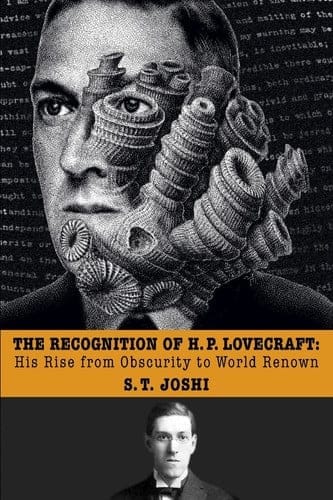
S. T. Joshi: Well, it's funny if you trace the h kind of the history of interest in Lovecraft and I could even wrote book about it called The Recognition of H. P. Lovecraft, in which I traced Lovecraft's the th the the development of of his celebrity mostly after his death because he had very little r reputation or celebrity during his lifetime, except in the pulp magazines. up to about even y you know, really up to about the early twentieth twenty first century, people actually didn't care a lot about the racism. I mean there are there are interesting cultural reasons for that. the camps biography does go into it to some degree and people thought he had emphasized it more than it should have been. but I think how can I put this? i you know, some people say, the the the The argument that Lovecraft was just a product of his times is a fallacy. I don't think so. in fact, not only was Lovecraft a product of his time, but we are also a product of our times. there are good cultural reasons why we, some of us, find this issue kind of obsessively interesting. or or or and and there are some people who just use this issue to, you know, kick Lovecraft in the butt Fine. If they want to do that, go ahead. Loughraff will survive. He's he he's he's established in w in in world literature. He's not gonna go anywhere. I'll I'll say two things on this subject. First of all, Lafraff was by no means alone in in the attitudes he espoused. You can go to Jack London, who was ferociously anti Asian, you can go to Robert E. Howard, who was also a a racist, you can go to T. S. Eliot, who was an anti Semite, Ezra Pound, who was a fanatical anti Semite, was in fact was placed in a sanitarium during World War II because of it. and and so on and so forth. And the other point is that racism, to my mind, occupies a very small element in the totality of Lovecraft's intellectual and cultural and literary output. as one one r scholar says racism really doesn't affect the the majority of lovecraft's fiction and the any attempt to do so i is doomed to failure. It simply isn't there. Where's the racist element at the Mountains of Madness or the Colorado Space or even the Dunnage horror? It just isn't there. In fact there are some stories you could read that that might make you think that Lovecraft is a prejudice against white people. So it's all a matter of interpretation. and and frankly you can read Lovecraft stories without having any awareness of this issue.
Terry Heath: So you've written is it two novels at this point?
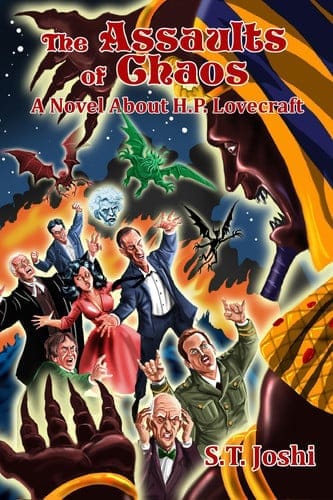
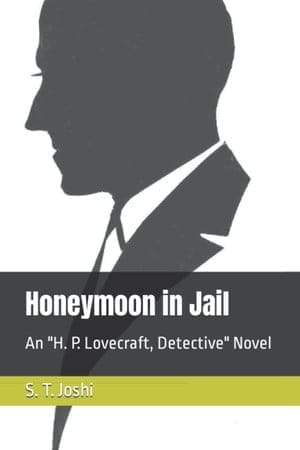
S. T. Joshi: well, it depends on what you count as novels. I've written a couple detective novels and then I wrote a I've written two novels about l using Lovecraft as a character. One was supernatural, this was called The Assaults of Chaos. The other is a detective story in which Lovecraft and his soon to be ex wife, Sonia, get involved in a in a mystery in Brooklyn in nineteen twenty eight. And I rather like that one. what is that one called? Honeymoon in Jail, I think it's called. and I just came up with a plot for a second, H. P. Lafreff detective novel. I you know I I lot of people have written written about Lovecraft as a fictional character. Some well, some maybe not so well. I like to think that my work on Lovecraft's biography ha has given me some insights into Lovecraft's personality that maybe other people don't have, or at least I have access to a lot of information that is not readily available to to most people. And so I use a lot of that in in these works. I sometimes quote directly from Lovecraft's letters and put put them in his mouth and, you know, stuff like that to make make it sound more authentic because i these are his actual words coming out of out of his mouth. So, and as I say, it all these these particular words reflect my my belief that Lafraff really is a pretty interesting person and I would love to have met him if I had had the chance.
Terry Heath: What made you want to write him as a character instead of write about him?
S. T. Joshi: Well, I had already written about him. I wrote a twelve hundred page biography. Not to mention all the critical work I've done. but other people had been writing stuff about Lovecraft as a character, and some some of them are excellent. either short stories or entire entire novels. And I said, Alright, well maybe I can do that too. The the Lovecraft detective idea is a sort of a spin off on an earlier my other novels in which I came up with a s kind of hard boiled detective from the nineteen thirties. because I I find the hard boiled detective school of writing very, very interesting. I mean I've read probably more mystery stories than I probably should have. It's a it's a guilty pleasure. and quite frankly, most of these works are quite insubstantial. I mean there's there's no reason to think that Agatha Christie or Dorothy L. Sayers are are are high literature. They're just not, you know. but they're entertaining, they're fun. they help you pass the time. but the hard boiled school of of Dashiel Hammett and Raymond Chandler and and James Kane and and others, all the way up to Ross Macdonald and and also Sue Grafton, an outstanding female hard boiled writer, this stuff is pretty is is close to literature. R Raymond Chandler is really one of the finest writers in American literature, and needs to be deserved or deserves recognition for that. So I said, Alright, let me see if I can use the hard boiled idiom and my knowledge of the nineteen twenties and nineteen thirties to portray something, you know, convincing in in that area. So I wrote these two short novels involving this one particular detective that I said, alright. Well I'll make Lovecraft a hard boiled detective and and implausible as that may sound, but I I said let's let let's see if this'll work and I I thought it did.
Terry Heath: Does being a scholar on Lovecraft get in the way of being a novelist?
S. T. Joshi: It can, yes. I think sometimes my work does seem a little too what's the word? not not vital enough, but I I I'm aware that that writing fiction You have to write something that that moves, and I I'm I'm heavily plot based. I used to r to write out plots fairly detailedly in terms of literally a chapter by chapter breakdown of of how what I wanted to say and how I wanted to say it. In in a detective story that may be necessary because you have to lay the groundwork and plant all the clues and and then and then fashion how the detective's gonna solve the case. That itself is a is a s kind of a separate thread that you have to work into. It. but of late I have not been using outlines, I've been sort of just winging it, and I think I did in in this novel Honeymoon in Jail, which in in a sense kind of developed as I was writing it in somewhat unexpected ways. and I found that kind of interesting and I hope other readers found it too. So I think I've reached the stage where I don't really need to plot out a s a a a a novel quite as as rigidly and caref carefully as I once thought I did, because you develop spontaneity this way by by letting your creative juices flow and and seeing what the result is.
Terry Heath: So you founded Spectral Realms in twenty fourteen. how would you describe a as a journal of weird poetry or?
S. T. Joshi: It's a journal of weird poetry and we we have also reviews and articles, but mostly poetry. I'll tell you,
Terry Heath: Okay.
S. T. Joshi: over the last, I don't know, now th four or five decades, there's been a tremendous resurgence of weird poetry. People like Wade German in Canada, Ann K. Schwader here in the US, and some Australian writers like Lee Blackmore and Kyla Lee Ward, so many others. and I felt w I in Hippocampus Press felt that There's re there are other journals out there, I'm sure, and they'd all do good work. but I wanted a journal that focuses specifically on weird poetry. and I'll tell you, I am never short of contributions. I mean I get submissions all the time and that's great. I love to read read poetry. And I think I think people should read poetry. it is a shame and a tragedy that poetry of all sorts has fallen out of our cultural landscape. I think that's that's a a really bad indictment of our own culture, but it's also pr a fault of some of the poets who write you know, beginning i in the twenties and nineteen thirties, like Elliot, like Pound, y who write in this obscure idiom that that is meant to be bred only by a small coterie of of of like minded individuals. That's that's not what literature is, that's not what poetry is. th so the poets themselves bear some responsibility for for the the the lack of interest in poetry. Weird poetry I think therefore is more accessible to people because oftentimes it tells a story, it's not written in obscure language, it you know, it's it's open to anybody who has wants a little thrill out of out of little piece of literature, whether it be a s a sonnet or even a quatrain or a a a more extended poem. So I continue to attract new contributors all the time. Every single issue has has contributors who haven't submitted before and are doing outstanding work. And not only that, I'm attracting contributors from around the world. I mean they're writing in English, but they come from Ukraine, Brazil, you know, Russia, y you name it, even Japan. so this is this this has become a kind of a worldwide poetry journal and you know it's it's all to the good.
Terry Heath: What do you look for in a poem that that you'd never look for in a story?
S. T. Joshi: Well, okay. I I like to think that I'm pretty wide open in terms of w what I would accept for Spectral Realms. we many poets of the weird school tend to write informal verse. There was a time when formal verse was really looked down upon because they felt it was confining. people like free verse, you know, let's let's let's let's break the the the the the the mould here. Let's let's you know relief ourselves from the from the shackles of of rhyme and meter. Well, that's nonsense. You know there's great work to be done with those shackles, so called. and a lot of weird poets have done outstanding work. But I'm perfectly willing to consider free verse also. I do tend to s to draw the line at deliberate obscurity. I do send Pon's back saying, you know I must be stupid because I don't understand this poem. So
Terry Heath: Yeah.
S. T. Joshi: if I don't understand it then I'm sorry it's not gonna make it in there. and sometimes I get revisions, sometimes I just get new new submissions. But you know, I I I like a story to be a poem to be comprehensible. whether it actually tells a story or just presents some wonderful weird imagery or whatnot. let's make it understandable. That's that's the bottom line.
Terry Heath: Twenty five issues in now with spectral realms. What's the state of weird poetry now?
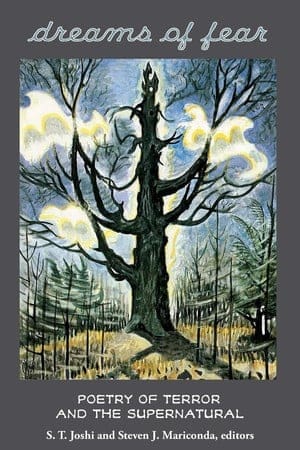
S. T. Joshi: I think it's thriving. let's be honest, nobody nobody makes money by weird poetry, and frankly, I'm not sure that our journal itself even makes money out of it's it doesn't exactly fly off the shelves. But our publisher is determined to keep on publishing it because I he knows that there's good work to be done there and eventually it'll it'll find his audience. So, And Hippocampus Press and other presses too also publish whole books of weird poetry. In fact, a new press emerged a couple of years ago, Jack and Apes Press, run by Dan Sauer, a great graphic designer. but he has said, Okay, I I want to publish weird poetry almost exclusively and maybe he does other work now, but he started just by publishing books of weird poetry, and in doing really, really good work and and his books are lavishly illustrated. either by himself or by by other artists he commissions. really good products there. And again, pa as paperbacks, not not expensive. So, you know, easily affordable by anybody. But so yeah, I think Weird Poetry is thriving as it as it never has. I mean, you know Throughout literary history th the the the the number of weird poets has been fairly slim. I I compiled, in conjunction with Steve Mariconda an anthology of historical anthology of weird poetry called Dreams of Fear, going back to the classical era, you know, with the with the excerpts from Homer and Virgil and Horace and other poets like that, all the way through the, you know, Middle Ages, you know, there's great there's great weird stuff in Milton. for example the the the the the images of hell in in book two of Paradise Law is fabulous. but you know, there was never a really a movement of weird poetry. until really th th this th the later twentieth century. in part that was inspired by Lovecraft, by Clark Ashton Smith. they did such incredible work. Smith undoubtedly is the greatest weird poet o of all time, and one of the great American poets of all time, and I hope he eventually gets gets some recognition along that line. But them and they and their disciples, people like Donald Wandrai, Frank Balknap Long, any number of others continued the the trend of weird poetry and let's not forget that Arkham House published a number of of really good volumes of weird poetry. people like Richard L Tierney and so many others And that that was a a really good thing that August Derlith did, with with Arkham House. And so in some senses I I feel I'm following that tradition, to get weird poetry out out to readers.
Terry Heath: So you've edited journals since nineteen seventy nine. What does editing give you that writing doesn't?
S. T. Joshi: I'll tell you. I I think I'm more naturally an editor than a writer. I love writing. I love writing criticism. I love writing reviews. I love writing fiction whenever I have the inspiration. my problem is a as a fiction writer, I I just can't come up with any ideas. I don't I don't know how people come up with ideas for fiction, but somehow sometimes an idea just sh comes to me and I I write, but I I've done a lot of editing and that that comes also from my my the one the one job that I had at a at an office. I I worked in New York City for a firm called Chelsea House Publishers, between the years nineteen eighty four and nineteen ninety five. That's when I decided to give up working on a on a on a PhD in classics. I I left Princeton and I said, Mm, this is this is not how I wanna want to spend my life. I don't wanna be in the academic community for the rest of my life. just teaching other people. that seems kinda limiting and it seems not really the real world, you know. So luckily I got a job in publishing and worked my way up and at that time I was involved in a huge project of reprinting literary criticism on authors or movements or whatnot. We did many, many books of that subject. and I found that that editing was something that came naturally to me. And so I I because I love working with with the written word. that's that's i it's such a thrill to to to to work at that granular level w with with words, whether it be poetry or prose or or w what have you. and of course at at Brown University I started editing Lovecraft. That is to say, I did I started looking at his manuscripts and finding literally thousands of errors in the previously published texts by Arkham House of his fiction, not to mention his poetry and essays. Those are also full of errors, but so again working very, very closely to to determine the exact text of of of Lovecraft's work, instilled in me a sense of of what it takes to be an editor. I it seemed to come naturally to me and so I I continue to enjoy working at that level, whether it be with modern writers, or for my magazines, or, you know, if I still do work on older writers, I'm I'm doing a a a critical edition of Lord Dunsaney. That's that's coming up in in in the in the future. So, yeah, I I think I've I've edited far more books than I've actually written, so that's something that I seem to take to.
Terry Heath: And you have your you run your own press.
S. T. Joshi: Sarnath Press is a press that I established a couple of years ago, basically to publish books that I didn't want to burden other publishers with, because their sales potential is probably quite limited. but it's stuff that I wanted to get out. to to an audience and I just used Amazon's self publishing platform to do both ebooks and print books. and I think I've done some pretty good good work. for example, I did a three volume edition of the earlier short stories of Dashiel Hammett. you'd say, well isn't Hammett's stuff out there already? Well, yes and no. the fact of the matter is, and I won't go into great detail about this, but Hammett's work when it was collected in book form in the nineteen forties was, shall we say, adulterated. It was corrupted. Again, not not to go into it, but i a a lot of people have read have not really read Hammett. the way he wrote wrote it. so I felt that I wanted to go back to the original texts and and present the original texts of of Dashiel Hammett. just recently I finished publishing a three volume edition of the short stories of W. C. Morrow. Now who is W. C. Morrow, you ask? Well he was a friend of Ambrose Bears, writing in the eighteen nineties a and on up. he wrote one collection which I think has one of the one of the greatest titles you will ever devise for for a work of fiction. The Ape, The Idiot, and Other People. 1897. a great collection, but it's a it's a very tiny fraction of all the work that he wrote as a fiction writer from really as early as the 1870s all the way up. And I found a lot of his stories through simple searches like from newspapers.com, I have a subscription to that, and other sources that that revealed to me all this work that he had done that that has been been lost in newspapers and magazines of the later nineteenth century. Including a lot of early detective or crime writing, which really is quite I thought pretty advanced for its time. so I said, All right, well, I again I don't wanna I don't wanna, you know, l dump this on some other press that might take forever to get it out, so I'll just bring it out myself. and I as say the third volume just came out and I have lo I have I have you know, lots more titles to publish. I'm I'm publishing like one title every two weeks. getting
Terry Heath: gee.
S. T. Joshi: s getting getting stuff out there and it's probably not selling like wildfire, but it's it's out there and it'll be on out out there forever unless Amazon collapses, which doesn't seem likely.
Terry Heath: Yeah.
S. T. Joshi: so it's fine.
Terry Heath: How did how did you find unadulterated Dashiel Hammett manuscripts?
S. T. Joshi: Well, okay. The story is this. Dashell Hammett's work w w was p appeared in the magazine Black Mask originally. his stories appeared in Black Mask from as early as nineteen twenty somet well, twenty two or thereabouts, all the way up into the thirties. then the the the mystery writing team that called itself Ellery Queen, decided to publish these what are called digest sized collections of Hammett's writing, of these stories, because they were they were just lying there in in black mask in other magazines of that era. Well, I found definitive evidence, if by consulting the Ellery Queen Archives up at Columbia University, that Ellery Queen basically rewrote or abridged Hammett's stories in the process of collecting it for these digest editions. There was one story that ran to 17,000 words in the original Black Mask appearance. Hillary Queen Hillary Queen apparently thought this was too wordy, cut it down to thirteen thousand five hundred words. So like you know whatever and Hammond wasn't around to supervise this publishing. He was actually up in Alaska in the Aleutian Islands, during the war. so he had no way to to combat this and and he needed the money, so th you know, he just let Eller Requeen do what they what they wanted, apparently. so fine. and then these adulterated texts got reprinted in in you know, book after book. For example in Lili Lillian Hellman compiled a volume called the Big Knockover, but used these adulterated texts. And so lots of people read those texts. in fact, when the Library of America contacted me about this matter, if I don't know how they heard about it, but they must have heard that I had done work on this, I said, yes, I can present with you definitive evidence from the Elder Queen archives that they they rewrote Dashiel Hammett. So the only source you can use is the original Black Mask appearances. There are some manuscripts of Hammett's work, but th not not very many. basically we have we have the original magazine appearances and that's that's the only text that can claim even remote authority. So they did that but they didn't print all the text. They you know their their selection of Hammett's stories is a selection, not not the complete complete fiction. So I said, All right, there's still room for my edition of the complete fiction of Hammett from nineteen twenty two up to about nineteen thirty one, which is which is what's at currently in the public domain. couple more years later I may publish another volume of more stuff w once it falls into the public domain.
Terry Heath: What what is restored are the things that are stylistic that had been edited out.
S. T. Joshi: yeah, there's some really vivid writing I think Ellery Queen felt that some of the language had been had become sort of archaic, you know, these like nineteen twenties slang that people didn't understand anymore, stuff like that. But they just felt I mean you'd have to look, you know, individually, but they just they thought, Hammett can be tightened up, you know, he t takes too many words to say whatever he needs to say. Which is nonsense. because a writer like Tammit, you know Every word counts, believe me. Every word has has some significance to the final end. and, maybe they had some space restrictions because these so called digest p books that they issued, they looked like little magazines. maybe they had a word limit or something and they said, All right, well, we gotta hack this story down if we're gonna get this in the book So I don't know what their thinking was. But, you know they were not scholars, they're not they're not interested in preserving the the purity of the text. They just wanted to get this stuff out there to people. so fine, but somebody should have gone back and done this work before before I did, so whatever.
Terry Heath: You've said there's still work to do in the Lovecraft scholarship. What's left?
S. T. Joshi: so much. I mean I'll tell you, every issue of Love the Lovecraft annual has eye opening articles on on Lovecraft, whether it be on an individual story or something relating to his life or work or or f thought that had never occurred to me before or or hadn't thought of as as carefully and and and systematically as as these aut authors do, I still think a lot of work still remains to be done specifically in portraying Lovecraft within the context of his times, whether it be in terms of political history, cultural history, social, literary history, and these letters, now that they're all all out there for anybody to read, will be a great mine of information from from that perspective. Loftrev really was a person of his times in many senses of the term. he liked to pretend that he was a a you know a fossil from the eighteenth century. Well, I'm sorry to say it that's nonsense. That was a pose that he put on, just because he he had a lot of problems with living in the early twentieth century, just as I hope we have some problems with living living in our day. and so he looked back to the eighteenth century for certain kinds of of of e aesthetic reasons. but he he really was a a person of his time. He read newspapers, he read magazines of the day, he was fully up on on you know th the the the social cultural developments of his time and and I think that these things worked his way into into his fiction more than we s fully realize. And I think there's more work to be done in that perspective.
Terry Heath: The Star Treder is the first full life of Clark Ashton Smith. Why him and why now?
S. T. Joshi: Well, I'll tell you. Smith, certainly deserves a biography. there's a lot of documentary evidence, w about him, basically his own letters to all kinds of people, whether it be Lovecraft or George Sterling or Samuel Loveman or all sorts of other people he wrote to, lots of memoirs of of of him by by people who met him. and you know, There were a couple of other people who I was hoping would write a biography. I won't mention them, but actually one of them just died, of course, is Donald Sidney Fryer, the great Donald Sidney Fryer, who knew Clark Ashton Smith late in Smith's life from the late nineteen fifties on and since that time did tremendous work in interpreting Smith and bringing Smith to to to the public in in terms of of various editions of his work. but, you know, as as he aged he I think he he found his that he just wasn't able to to summon up the energy to do a biography. So I said, All right, well I guess that leaves me because I have by that time I had assimilated a lot of this information. I had actually edited most of Smith's letters to these people I just mentioned in various volumes that Hippocampus Press published. and so I had the documentary evidence available. I had to do more work, actually went to Auburn, California at one time, which is where he lived most of his life and and, you know, fished around there and I I so I I I I felt I I was in a good position to write the biography and and I'm not a young man anymore either, but so I figured I better get to this before I am incapable of doing
Terry Heath: Mm.
S. T. Joshi: this work. and so I did and it took about a year, not even a year. I'm surprised it didn't it took l didn't that it didn't take longer. but it just it just flowed. I mean, it almost was like writing a work of fiction. And I th I think it came out well. I hope other people think so. and based on that, I am now writing the biography of George Sterling, who was also, was Smith's first mentor as a poet. Smith sent Sterling his early poems in nineteen eleven when he was not even eighteen years old, and and Sterling was completely blown away by some of this early stuff and and as well he should have been. but Sterling himself is a fascinating figure. he he was so well connected with people. He knew of course Ambrose Bears, who was his mentor. He knew Smith. He knew H. L. Mencken. He knew Theodore Dreiser. He knew Jack London. on and on and on. And he had a a a real colony of of artists and painters and other people like that in the town of Carmel by the Sea, in the early twentieth century. That was a real bohemian place at the time. Not anymore. It's fabulously wealthy now. You c y you cannot afford to live there unless you have many millions of dollars. So
Terry Heath: Mm-hmm.
S. T. Joshi: but back then it was just starting out as a as a you know, a little little town and this real estate developer said, Hey George, you wanna you wanna you wanna head take this house and and and bring a bring a bunch of your weirdo friends with you? Okay
Terry Heath: Yeah.
S. T. Joshi: fine, I'll do that. And, lots of interesting people came instead. Even even briefly, the young Sinclair Lewis was there for a while. so I'm gonna this biography that I'm writing about Sterling is kinda be a collective biography of all the people whom Sterling knew at at the time over the course of his life. of course it'll discuss his own poetry and other writing as well, because he is he is a fine poet and and his work deserves to be better known than it is.
Terry Heath: You've written on atheism, prejudice, the American right, bestseller culture. How do these relate to the weird fiction work?
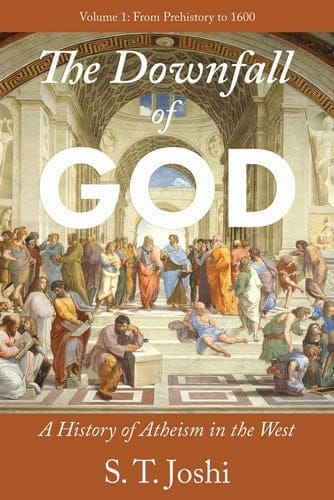
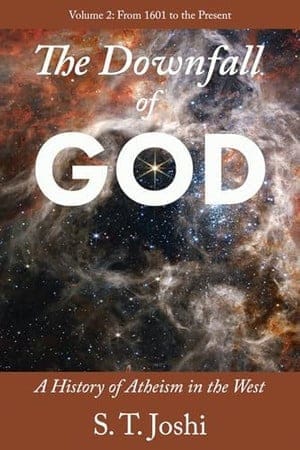
S. T. Joshi: Well, that's a good question. as I say, I think the atheism was pretty much drawn out of Lovecraft. You know, I was re I was not raised in any religious tradition. My my parents, who are th technically Hindu, My father didn't believe that our that his children, my two sisters and myself, should be indoctrinated into any religion, whether it be his own or any other. and we were left to dis to discover these things for ourselves. if we wanted to believe in something, fine. If not, that was fine also. but as I read Lovecraft's letters, even as a teenager, I said, you know This guy's on to something, he has some really trenchant writings on atheism, mostly in his letters. and and I became convinced by them. And so from Lovecraft I read other writers like Nietzsche and Bertrand Russell and Thomas Henry Huxley and all sorts of other writers who who, you know dominating the conversation in in atheism at that time from the eighteen nineties all the way up to the present day. and so I started compiling anthologies relating to atheism and agnosticism. I did a big book on the atheism in the Enlightenment philosophers of the of the 18th century, French, German, American, English. And then just a couple of years ago I said, Alright, well, there does not seem to be any comprehensive history of atheism from classical antiquity all the way up to the present day. Again, I felt I was in a good position to do so. not only because of the past work I had done, but because the library here in in in Seattle, the University of Washington Library is an outstanding library, lots of resources there. So even as as Covid was finally kinda waning down, I started haunting that library to get all sorts of books on on the subject as I needed them. and so I wrote this two volume history of of atheism in the West called The Downfall of God. it's out there. again, I don't think it's rushing off the shells, but to me it's it's my greatest intellectual achievement. and it's if if I'm remember for anything it it'll be it w should be for that.
Terry Heath: What if you hadn't found that book when you were thirteen? What would you have done, do you think?
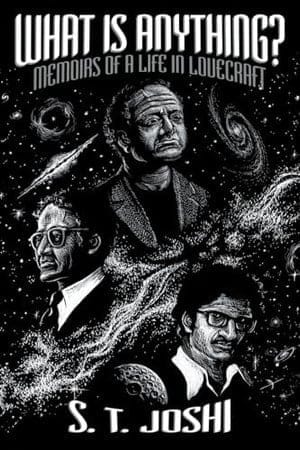
S. T. Joshi: I can't even begin to imagine. I like to think that I would have ventured into literature somehow because I was actually starting to write fiction even before I read Lovecraft. And either detective stuff or or, you know, horror stories, you know, based on my readings of Beers or some of the stuff that was in these r you know, Rod Serling anthologies and Ralf Hitchcock anthologies and stuff like that. But but yeah, la I can't even begin to imagine the course of my life without Lovecraft. In fact I wrote a I wrote a my memoirs some years ago, under the title What is Anything Memoirs of a Life in Lovecraft. showing the centrality of Lovecraft t to my whole way of thinking. and you know, I I just it's it's s I I just can't imagine w what I would have done otherwise. But I I hope I would have been a w writer of some s sort anyway.
Terry Heath: Is there anything you're still trying to prove?
S. T. Joshi: I don't think so, my wife, who says, Well you publish so many books, you know, who are you competing against? I said, Well, I guess I'm competing against myself, if anything. I'm not competing against anybody. I just like doing this stuff and until I lapse into dementia I'll I'll keep on doing it. you know, I'll tell you I am getting a little forgetful these days. I think I think everybody's brain is just too overloaded with information and so we can't keep it all in our our minds. even though I refuse to do any social media, I don't even look at my cellphone if I can help it. I I God knows I spend enough time in front of a computer anyway. so, I mean I've reached the stage where I think I can put all this stuff together, I can bring my interest in these various disciplines together into into a unity and and and you know, get something out there that that it that has some value that that perhaps other people couldn't have done.
Terry Heath: Mm. What's the next big thing on your plate or what's on your plate right now?
S. T. Joshi: Well, as I say, this biography of George Sterling, that's gonna take more effort than than the work on Smith because there's even more documentary evidence out there. And I'll probably have to take a trip to the Bay Area, and and do some research at libraries down there and and just scout out the area where he lived. it it's changed so much as you can imagine from the early twentieth century, but some places haven't changed all that much. You know, he loved he loved the natural landscape of California. both whether it be the the Bay Area or B Big Sur or Point Lobos or all these places that he writes about in his poetry. He once wanted to write a a kind of a prose prose poems about all the California missions. I can't remember how many missions there are, fifteen, twenty missions, established by the Spanish, you know, in the course of the seventeenth and and eighteenth centuries, all up and down California. He never got to it. he started but he never finished. but the history of California I find really quite interesting, whether it be from the the Spanish settlers, the the the Native Americans before that and then then the Americans and and and whatnot. and and San Francisco in particular has become, you know from a very early a period, became such a cultural haven. Ambrose Bierce was there from the eighteen sixties onward and became a great journalist and and fiction writer and author of the Devil's Dictionary. I wanna do more work in Bierce if I can. I th there's probably needs to be a new biography of Bierce. I'm I'm not really satisfied with the biographies that have come out over the years. but that's a lesser priority because again There there are biographies out there, whereas there is no biography of Sterling, there was no biography of Smith. So I'm gonna try to tackle some of these things that that other people haven't tackled and after after Mr. Sterling I'll probably find something else along that line to to investigate.
Terry Heath: If you've sparked an interest in anyone who's listening in Lovecraft, where where would they start?
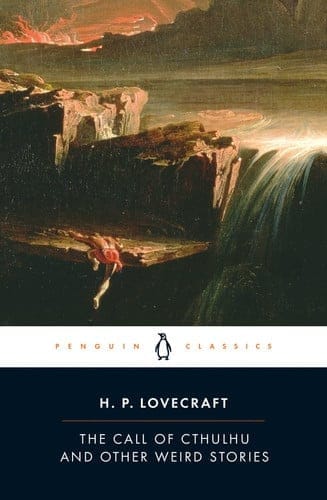
S. T. Joshi: Well, not to be not to be modest, but I edited three volumes of of Lovecraft stories for Penguin Classics. I'll tell you I was flabbergasted that they even asked me, because, you know, this was in the late eight late nineteen nineties and Said, boy, l Lovecraft's gonna be a be a classic. now of course, let let's be blunt about it. I think Penguin came to me because they wanted to sell books, not because they thought Lovecraft was this lofty figure of literature. and those books have done quite quite well. But the first one called The Call of Clue and Other Weird Stories, has fairly extensive commentary by me about, you know, certain partic particulars in the stories. the other two books even more so actually. and so I I like to think that my notes helped the reader along in terms of understanding some of the stuff in the stories that may not be immediately re relevant or understandable to people. so I think that first collection, which was was meant to be sort of a best of collection of Lovecraft, would be a good place to start. But th there are other other volumes of that sort that that that are out there also.
Terry Heath: And then for weird poetry itself, of course they can get a copy of Spectral Realms, but where where would you recommend somebody start looking into that?
S. T. Joshi: Well, as I say, I l I I think I came out that that anthology I mentioned, Dreams of Fear, which is again that's a hippocampus book from twenty thirteen. I I think that has a lot of good stuff in it. not just these standard works by Poe and Smith and whoever else, but you'd be surprised how many how many major poets, you know, of of of classic poets like like Robert Frost and Yates and practically every any poet you care to mention, has written something a little weird, that y you might not expect. and we did some good work hunting out the the weird poetry of some of these standard poets. Coleridge, of course, The Rive of the Ancient Mariner that's probably the greatest weird poet ever written. But so that'll give you a good historical perspective. and, reading the individual poetry collections by the people I mentioned, Schweider and Blackmore and Wade German, th those are you know, y y you'll never go wrong reading any of those poets.
Terry Heath: You've done a lot and you have a lot of things in the work, but is there anything on your dream list that you hope to tackle at sometime soon?
S. T. Joshi: Well, in terms of literary work, I'll tell you, Through Lovegraf's essay Supernatural Horn Literature, I discovered the work of Lord Dunsaney. And i he blew me away just the way that Lovegraf was blown away when Lovegraff read him w at the age of twenty-nine, I think, in nineteen nineteen. In fact I Duncani is a better prose writer than Lovecraft. and he he wrote so much so much. I you can't even begin to imagine how much he wrote. and now I am working with the estate of Lord Dunsaney. to publish through Hippocampus Press a collected edition of Dunsaney's short fiction, which may go to ten volumes at least. at least seven volumes, but more likely something like ten. because and there's unpublished work by Dunsaney. Incredibly enough, after all these years, there's still some stories that have not been published. That is a is a is a dream that I I hope I live long enough to fulfill. we'll get started on that in a in a year or two. But and I want to write a biography of Dunseny, but that would require my possibly my spending time at Dunsaney Castle in Ireland, which I have done. about ten years ago. a a colleague of mine and I went to Dunsaney Castle outside of Dublin, spent two weeks there cataloguing his manuscripts, because all these manuscripts are there, but they were in really bad condition and you know Totally w higgledy piggledy, not not organized at all. so, you know, we got them into good shape. We put them in these, you know, library folders and boxes and now pretty much everything except the correspondence, is well catalogued. and we will draw upon that that work for for this edition that I just mentioned. But Dunseny needs a good biography too. There was one biography that w was written in the seventies and it's it's quite frankly awful. It's really bad. but I'm not sure I have the the energy or the the the time to go over to Dunsseny Castle and and and do that work. But somebody should.
Terry Heath: Well you've certainly written a lot and a lot of our audience is writers, a lot of new writers. myself I'm not young but I'm a new poet. What kind of advice would you would you give to young writers or new writers or l listening now?
S. T. Joshi: Well, I'll tell you. Writing is made up of basically two functions, reading and writing. By which I mean, you know, you if you're working in a specific genre like weird fiction, weird poetry, whatnot, it is helpful to have some understanding of where this field has gone over the last two hundred years or so. Which is not to say that you need to be wedded to the way people wrote back then, but i you should you have you have to have a sense of where this field ha has gone, has how it how it has developed over the centuries. don't just read the contemporary stuff. You gotta have some sort of historical perspective on on w what's going on here because even the great writers of our time, Ramsay Campbell in particular, Caitlin Kearnan, Jonathan Thomas, Michael Shea, the late Michael Shea, a number of others, all drew upon past writing in weird fiction, whether it be Lovecraft or other writers going all the way back to Poe. But nevertheless they became their own writers. They were not just imitators, by not not by any stretch of the imagination, but their work is infused with an understanding of of where this field has has been. and in terms of writing, just start writing. Don't be afraid of the blank page or the blank s computer screen. you'll never get anywhere unless you actually start writing and you know, try different modes of writing, different, you know, methods, whatever. but just get something down. I think y if you're a good editor of your own work, you can you can fix up a w a work if it's if it's not quite right the first time. send your work around. I I get contri you know, I get some you know offers from all sorts of people. Hey, can you can you look this piece over and what do you think about it and what not this is not officially a submission, they just somebody wants to you know wants my opinion on something and if I have the time I'll I'll you know, I'll give the work a read if it's you know, and and and give some advice to to the author. but, you know, and I think many, many established writers and critics are are prepared to do this. you know, y most most young authors need some help and that's okay. There's nothing wrong with that. you know, you just you got that that's how you you know that's how you get better. so just just keep at it. If you if if you know if you're really determined to be a writer, you will keep at it and let's hope you'll get get successful.
Member discussion